


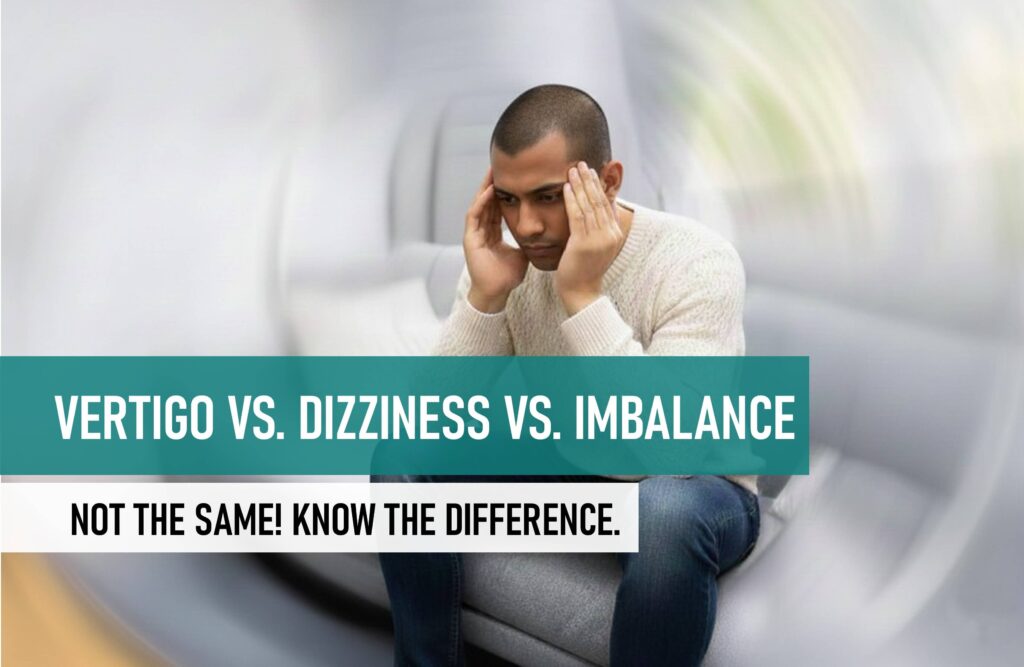
Many people use the terms vertigo, dizziness, and imbalance interchangeably. But medically, they are three different symptoms with different causes and evaluations. Understanding the difference helps you know when to seek help from a vertigo specialist or when neurological tests are needed.
What’s the Difference?
| Feature | Vertigo | Dizziness | Imbalance (Unsteadiness) |
|---|---|---|---|
| How it feels | Spinning sensation (you or surroundings seem to rotate) | Feeling faint, light-headed, floating, or “about to pass out” | Difficulty walking straight, unsteady legs, tendency to fall |
| Common cause | Inner ear disorders, BPPV, infection, stroke | Low blood pressure, dehydration, anxiety, heart issues, medication effects | Neurological issues, aging nerves, spinal problems, cerebellar damage |
| Triggered by | Head or body position change | Standing suddenly, stress, hunger | Walking, posture changes, imbalance turning |
| Associated signs | Nausea, vomiting, ear ringing, hearing loss | Palpitations, sweating, weakness | Tremors, difficulty coordinating hands or legs |
| Tests needed | VNG, audiometry, MRI brain | Blood tests, ECG, blood pressure monitoring | MRI brain, spine tests, gait and nerve evaluation |
| Doctor to visit | Vertigo specialist / ENT + neurologist | Physician / neurologist | Neurologist; physiotherapist after nerve diagnosis |
Why is it important to know the differences?
Different symptoms = different causes = different treatments.
Many patients try vertigo medicines for dizziness or use heart medicines for imbalance. This delays diagnosis and can worsen conditions like nerve compression, cerebellar disease, or stroke risk. A proper medical evaluation helps target the real cause.
When are the neurological tests required?
You should see a neurologist in Ahmedabad if your symptoms include:
- Vertigo with double vision or difficulty speaking
- Imbalance while walking, especially to one side
- Vertigo lasting hours to days
- Sudden severe dizziness with headache
- Tremors, weakness, or numbness
These may indicate brain or nerve-related causes that need MRI, VNG, or brain mapping.
Can lifestyle habits make these symptoms worse?
Yes. These symptoms can worsen due to:
- Poor sleep and stress
- Dehydration or skipping meals
- Too much screen time causing motion sensitivity
- Wrong posture (especially long mobile use or desk work)
- Lack of physical activity affecting balance control
Simple habits that help:
- Drink water regularly
- Improve posture and take breaks from screens
- Avoid sudden standing or jerky head movements
- Do balance or vestibular exercises (after medical advice)
Final takeaway…
Vertigo, dizziness, and imbalance may look similar but originate from very different systems — inner ear, nerves, heart, or brain.
Understanding what you’re experiencing helps you choose the correct evaluation and treatment path, instead of relying on over-the-counter vertigo medicines.
Looking for a neurology clinic in Ahmedabad? Visit Setu Neurology Clinic or drop us a message.
Source/s: Banner Image by Google Gemini (AI Generated)