






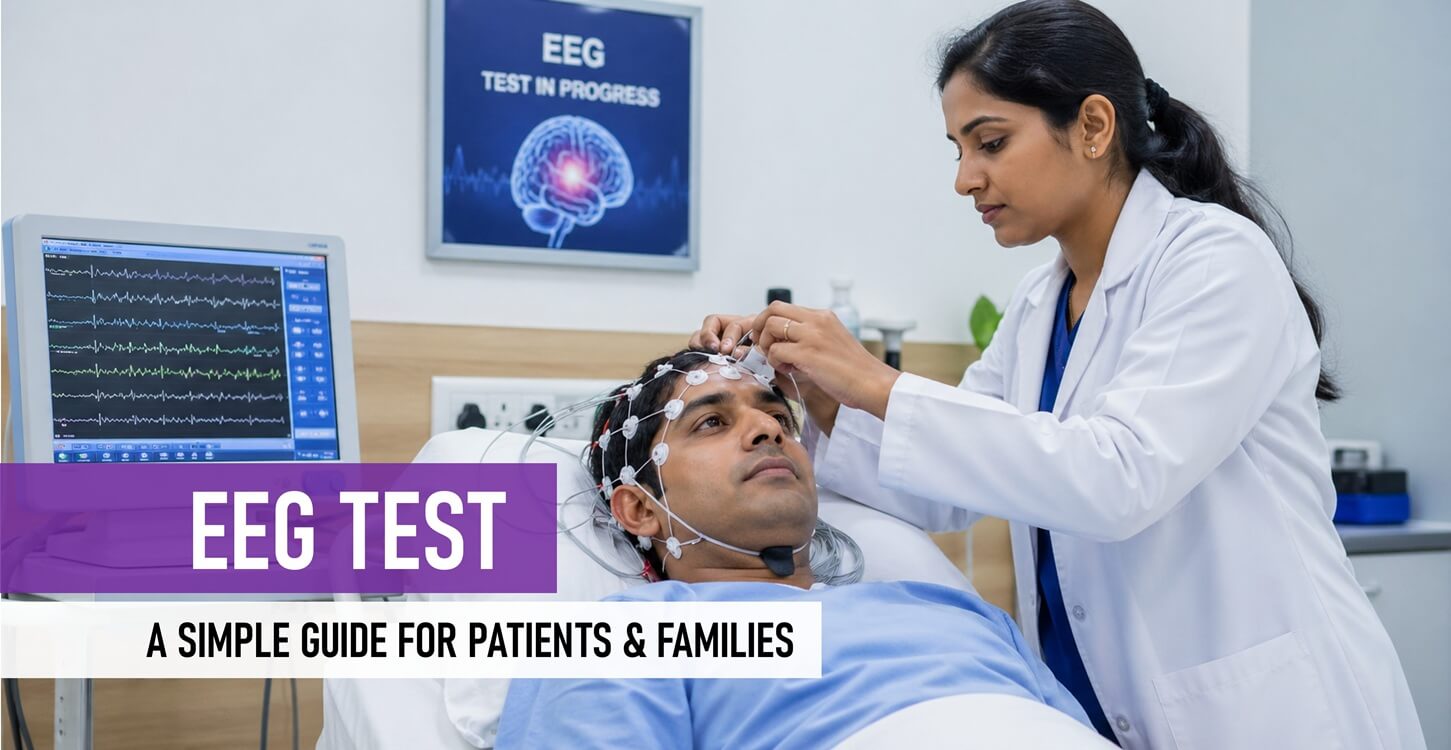
If your doctor has recommended an EEG test, you may have questions or even feel a little anxious. What does the test involve? Is it painful? And what can it actually detect?
An Electroencephalogram (EEG) is a safe, non-invasive test that records the electrical activity of the brain. It helps neurologists diagnose and monitor a wide range of neurological conditions, especially seizures and epilepsy. Understanding the purpose of the test can make the experience much less stressful for patients and families.
If you are looking for a reliable EEG test in Ahmedabad, visit Setu Neurology Clinic accurate diagnosis and timely treatment.
For more detailed information about advanced testing options, you can also explore our dedicated page on EEG and Video EEG services.
When do doctors recommend an EEG Test?
Doctors usually recommend an EEG when they need to evaluate how the brain is functioning. It is commonly used when patients experience unexplained neurological symptoms.
You may be advised to undergo an EEG if you have:
- Seizures or suspected epilepsy
- Sudden loss of consciousness or fainting episodes
- Unexplained confusion or memory problems
- Sleep disorders or unusual nighttime behaviors
- Head injuries or suspected brain infections
- Developmental delays in children
Neurologists commonly advise an EEG test for neurological disorders when patients experience symptoms such as seizures, unexplained fainting, confusion, or sudden behavioral changes.
In many cases, an EEG helps confirm a diagnosis and guide the most appropriate treatment plan. It can also be used to monitor the effectiveness of medications or assess recovery after neurological events.
What does an EEG Test detect?
An EEG records brain wave patterns and identifies abnormal electrical activity in the brain. These patterns provide valuable information about how the brain is functioning.
An EEG can help detect or evaluate:
- Epilepsy and seizure disorders
- Brain infections (such as encephalitis)
- Brain tumors or structural abnormalities
- Sleep disorders
- Stroke or brain injury effects
- Dementia and cognitive disorders
An EEG is often recommended as a brain wave test in Ahmedabad to help doctors evaluate abnormal brain activity and diagnose conditions such as epilepsy, seizures, and other neurological concerns.
In some situations, your neurologist may recommend a Video EEG, which records both brain activity and video footage simultaneously. This allows doctors to correlate symptoms with brain wave changes and make a more accurate diagnosis.
Is an EEG Test painful or risky?
One of the most common concerns patients have is whether the EEG test is painful. The good news is that an EEG is completely painless and very safe.
During the test:
- Small sensors (electrodes) are placed on the scalp
- No needles or injections are used
- The electrodes only record activity—they do not send electricity into the brain
Most patients feel comfortable throughout the procedure. Even children and elderly patients tolerate the test well.
In rare cases, patients with epilepsy may experience a seizure during the test, especially if sleep deprivation is required. However, the procedure is conducted under medical supervision, and safety measures are always in place.
Looking for modern EEG diagnostic services in Ahmedabad? Contact Us!
How to prepare for an EEG Test: What to expect
Preparing for an EEG is simple, but following instructions carefully helps ensure accurate results. Here are some common preparation steps:
1. Wash your hair before the test
Clean hair helps the electrodes attach properly. Avoid using oils, conditioners, or hair sprays.
2. Follow sleep instructions
Some EEG tests require sleep deprivation. Your doctor will inform you if this is necessary.
3. Take medications as advised
Do not stop medications unless your doctor specifically instructs you to do so.
4. Eat normally unless told otherwise
Low blood sugar can affect test results, so regular meals are usually recommended.
What happens during the test?
- The test typically lasts 20 to 60 minutes
- You will lie comfortably on a bed or chair
- You may be asked to relax, breathe deeply, or try to sleep
- After the test, you can usually resume normal activities immediately
When should you consider an EEG?
If you or a family member is experiencing unexplained neurological symptoms – such as seizures, fainting, or sudden behavioral changes – an EEG can provide valuable answers.
Early diagnosis plays a key role in effective treatment and better long-term outcomes.
Need an appointment? Contact us or Drop a message!