





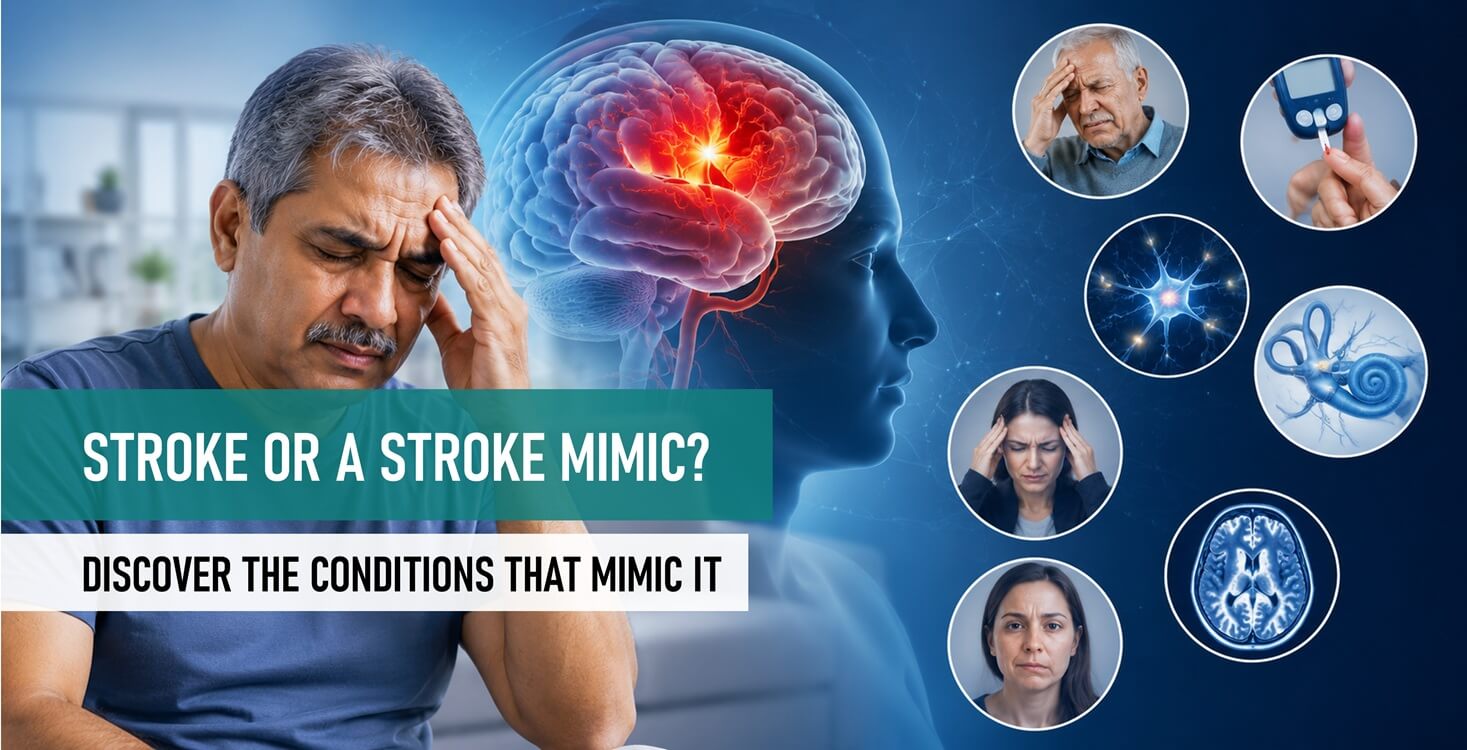
When someone suddenly experiences slurred speech, weakness in an arm or leg, dizziness, or confusion, it’s natural to think of a stroke. However, not every sudden neurological symptom is caused by a stroke – and surprisingly, not every stroke looks the way people expect it to.
Several medical conditions can closely resemble a stroke, making it difficult for patients and even their families to identify the cause. At the same time, assuming that symptoms are “just a migraine” or “only dizziness” can delay life-saving care. This is why every suspected stroke should be treated as a medical emergency.
If you’d like to understand What causes a stroke?, its risk factors, and available treatment options, you can also read our detailed guide on stroke treatment here.
Why is stroke often confused with other conditions?
A stroke affects the brain, and the symptoms depend on which part of the brain is involved. While some people develop sudden paralysis, others may only experience dizziness, blurred vision, difficulty speaking, or confusion.
Because these symptoms overlap with several other neurological and medical conditions, it isn’t always possible to tell the difference without a proper medical evaluation. Doctors often rely on neurological examination, brain imaging, and other investigations before confirming the diagnosis.
Common conditions that can mimic a stroke
1. Migraine with Aura
Certain migraines, especially migraine with aura, can cause temporary numbness, vision changes, difficulty speaking, or even weakness on one side of the body.
Although these symptoms can resemble a stroke, migraine symptoms usually develop gradually over several minutes, whereas stroke symptoms typically appear suddenly.
2. Low Blood Sugar (Hypoglycemia)
A sudden drop in blood sugar can lead to confusion, slurred speech, weakness, dizziness, and even loss of consciousness.
Since these symptoms closely resemble a stroke, checking blood sugar is one of the first steps doctors take when evaluating a patient with sudden neurological symptoms.
3. Seizures
After certain seizures, a person may experience temporary weakness on one side of the body, known as Todd’s paralysis. This weakness can last from minutes to several hours and may appear very similar to a stroke.
A detailed history and neurological evaluation help doctors distinguish between the two conditions.
4. Bell’s Palsy
Bell’s palsy causes sudden weakness of the facial muscles due to inflammation of the facial nerve.
Unlike a stroke, Bell’s palsy usually affects the entire side of the face, including the forehead. In contrast, a stroke often involves facial weakness along with difficulty speaking or weakness in the arm or leg.
5. Inner Ear Disorders (Vertigo)
Severe vertigo can cause sudden dizziness, imbalance, nausea, and difficulty walking. While many cases are related to inner ear problems, some strokes affecting the back part of the brain can present in a very similar way.
This is why persistent or sudden severe dizziness should never be ignored, especially when accompanied by other neurological symptoms.
6. Brain Tumors
Some brain tumors may cause weakness, speech difficulties, vision problems, or balance issues.
The difference is that brain tumor symptoms usually develop gradually over weeks or months, whereas stroke symptoms typically occur suddenly.
7. Multiple Sclerosis
During a relapse, multiple sclerosis may cause numbness, weakness, double vision, or difficulty walking. These symptoms can sometimes resemble a stroke, making neurological assessment and imaging essential for an accurate diagnosis.
Why you should never try to diagnose yourself
Many people search online or compare symptoms with friends or family members before seeking medical attention. Unfortunately, this can lead to dangerous delays.
Even experienced neurologists cannot diagnose a stroke based on symptoms alone. Investigations such as CT scans, MRI, blood tests, and neurological examinations are often necessary to determine the exact cause.
Whether the diagnosis turns out to be a stroke or another neurological condition, early evaluation leads to faster and more appropriate treatment.
What if the symptoms go away?
Some people experience symptoms that disappear within a few minutes. While this may seem reassuring, it could indicate a Transient Ischemic Attack (TIA) or “mini-stroke.”
A TIA is often a warning sign that a major stroke may occur in the future. Immediate medical evaluation can help identify the cause and reduce the risk of another event.
When should you seek emergency medical care?
Seek immediate medical attention if you or someone around you suddenly develops:
- Weakness or numbness on one side of the body
- Difficulty speaking or understanding speech
- Sudden vision loss or double vision
- Loss of balance or coordination
- Severe dizziness
- Sudden confusion
Even if the symptoms improve within minutes, do not ignore them. Prompt evaluation can make a significant difference in recovery.
The bottom line…
Not every sudden neurological symptom is caused by a stroke – but every suspected stroke deserves urgent medical attention until proven otherwise. Conditions like migraine, seizures, low blood sugar, vertigo, and Bell’s palsy can closely resemble a stroke, making professional evaluation essential.
If you or a loved one experiences sudden neurological symptoms, consult an experienced Dr. Vishal Jogi – neurologist in Ahmedabad for timely assessment. At Setu Neurology Clinic, patients receive comprehensive neurological evaluation and evidence-based stroke treatment for conditions affecting the brain and nervous system.
Need an appointment? Contact us or Drop a message!
Source/s: Banner Image by ChatGPT AI.